How does Primary 3 Chinese differ from Primary 2?小三华文与小二有什么不同?
Primary 3 introduces more language-use and comprehension question types alongside composition, oral and listening practice. The first three weeks revisit Primary 2 textbook Lessons 1–19, after which the range of question types broadens and children learn structured answering methods.小三在作文、口试和听力练习之外,增加语文应用和阅读理解题型。首三周复习小二课本第1至19课,随后扩大题型范围,学习有步骤的答题方法。
What does Primary 3 Chinese tuition cover in language use?小三华文补习的语文应用包含什么?
Language use covers choosing syllables, distinguishing characters and selecting words (including words with similar meanings), expanding sentences, completing cloze passages and arranging sentences into paragraphs.语文应用包括选择音节、辨字和选词(包括近义词)、扩写句子、短文填空以及排列句子成段。
How long are Primary 3 composition exercises?小三作文练习的篇幅有多长?
Composition length increases gradually through focused practice in character and scene description, working towards completing a four-picture composition independently, planned with a hamburger organiser, the six-question method and transition words.作文篇幅通过人物和场景描写专项练习逐步增加,目标是独立完成四幅图作文,并运用汉堡图、六何法和过渡词进行构思。
How are new comprehension questions taught?如何教授新的阅读理解题型?
Children learn basic methods for different question types — including multiple-choice, written-interaction, written-answer, response and character-trait questions — using question words and keywords to locate evidence in the passage and organise complete answers.孩子学习不同题型的基本答题方法,包括选择题、书面互动、问答题、反应题和人物性格题,并利用疑问词和关键词在文中寻找依据,组织完整答案。
What oral practice is included in Chinese tuition for Primary 3?小三华文补习安排哪些口试练习?
Oral lessons develop reading-aloud skills, picture description and oral interaction, supported by oral guidance, practice frameworks and scoring sheets. Children also take part in one-to-one mock oral assessments.口试课练习朗读、看图说话和口语互动,配合口试指导、练习框架与评分表。孩子也会参加一对一模拟口试。
Are there composition and mock assessments?课程有作文测验和模拟考吗?
Yes. The programme includes listening assessments, composition assessments, one-to-one mock oral assessments, and mid-year and year-end mock assessments, each reviewed with question-by-question feedback.有。课程包括听力测验、作文测验、一对一模拟口试,以及年中和年终模拟考,并通过逐题点评帮助学生复习。
What materials support revision at home?有哪些材料帮助孩子在家复习?
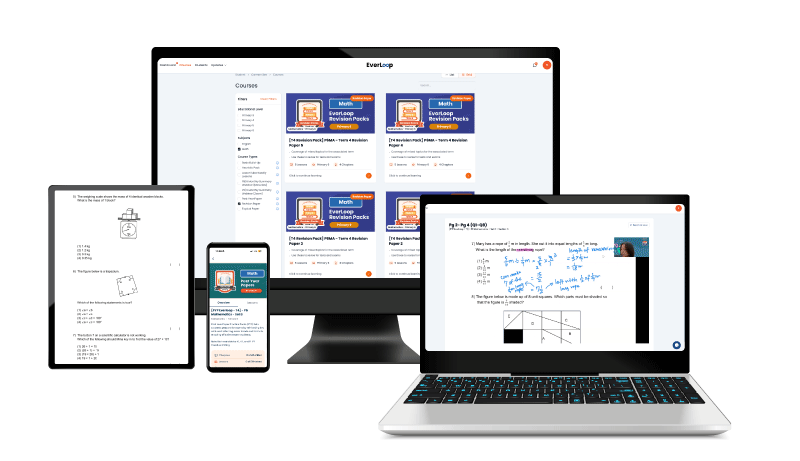
Materials include teaching videos, quick-reference cards, a vocabulary handbook, oral practice frameworks and scoring sheets. Spelling sheets issued after textbook lessons carry QR codes for practice-mode and dictation-mode videos, and enrolment includes the EverLoop after-class revision system.材料包括教学视频、速记卡、词语手册、口试练习框架和评分表。每课听写单附有练习模式和听写模式视频二维码,报名也包含 EverLoop 课后复习系统。
How does the programme prepare children for Primary 4?课程如何为小四学习做准备?
Primary 3 broadens question types and builds answering methods. In Primary 4, children continue related tasks with higher passage and composition demands, alongside further sentence expansion, rewriting and connective-word practice.小三扩大题型范围,并建立答题方法。小四在相关练习基础上提高文章和作文要求,进一步练习扩写、改写句子和关联词。