

Living Things & Classification
Observe features and use them to group the living things around us.
- Living and Non-Living Things
- Classification of Living Things: Plants and Animals
- Classification of Living Things: Fungi and Bacteria
AY2027 Registration Is Now Open! Try 4 Lessons
from Just $99. Enquire Now
GOT A QUESTION? Chat with a real person now.
WhatsApp UsA new subject, a world to discover. Our P3 Science lessons make living things, materials, life cycles and magnets approachable through real objects, experiments and guided practice—while teaching your child how to explain what they know.
No upfront deposit & registration fees
Preview Our P3 Science WorksheetsEnquire Now
AY2027 Trial Class Promotion
ScienceP3–P6
Free EverLoop after-class revision included.
Fees are subject to 9% GST. Promotion valid for registrations from 7 September 2026 onwards.

Science begins at Primary 3. We help your child understand each concept before applying it to questions, with friendly guide characters, class activities and step-by-step explanations. Our primary science tuition in Singapore builds both curiosity and the habit of using precise science words. This course is part of our Primary Science programme for P3–P6.
The Primary 3 Science Syllabus
Our programme follows the MOE Primary Science syllabus. P3 explores Diversity and Cycles and starts Interactions through magnets. Children observe, compare and classify before learning to explain their answers using the right concepts and keywords.
Observe features and use them to group the living things around us.
Connect the properties of a material to how we use it in everyday life.
Follow how plants and animals grow and change through different stages.
Explore magnetic behaviour through observation and simple experiments.
Build the habits needed to apply knowledge and explain an answer clearly.
Across Four Terms
New topics begin with a notes lesson, move into topical practice, and return in revision papers alongside earlier learning.
Diversity of Living and Non-Living Things; Classification of Living Things: Plants and Animals.
Classification of Living Things: Fungi and Bacteria; Diversity of Materials. Term 2 Diagnostic Test and go-through lesson.
Life Cycles of Plants; Life Cycles of Animals; Properties of Magnets; Making and Using Magnets.
Revision of all P3 topics; Term 4 Diagnostic Test and go-through lesson.
Term 1 follows the AY2027 plan. Terms 2–4 follow the AY2026 sequence while the AY2027 plan is being finalised; the topics themselves will not change.
From observing the world to explaining how it works.
Our lessons build towards these skills for your child:
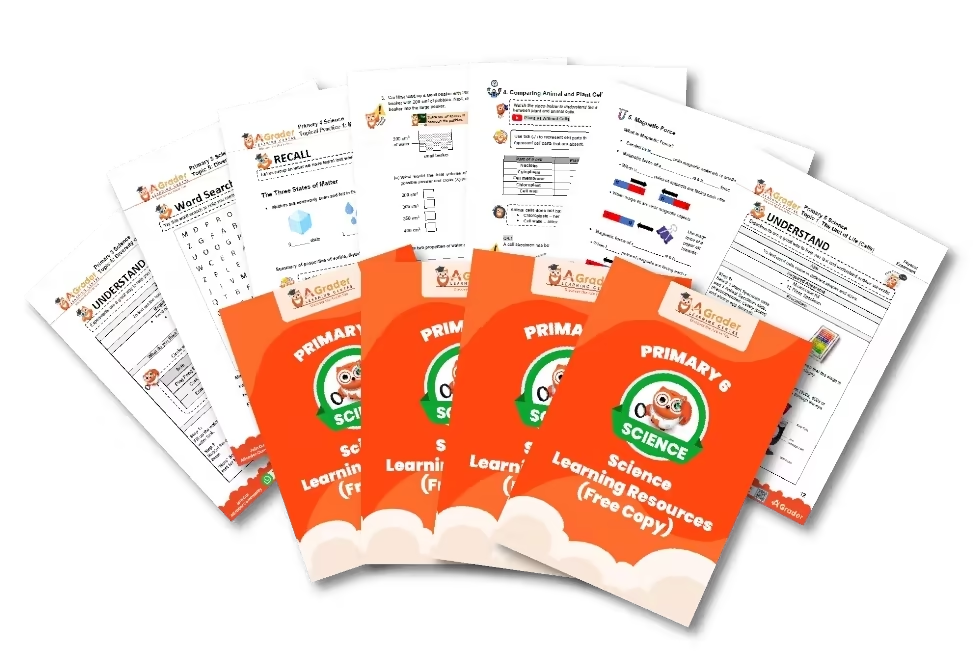
Learning Resources Preview
See how AGrader introduces concepts and guides question practice. Each topic comes with a concept map, a one-page cheat sheet at its final topical practice, and a full-colour termly infographic at the end of Terms 1, 2 and 3.
Download P3Inside the Classroom
One 2-hour lesson a week across four terms and about 50 weeks a year gives your child time to explore, practise and review. Our primary school science tuition in Singapore connects hands-on learning to the concepts and explanations that questions require.
Notes, diagrams, videos and short class activities introduce the concepts. Selected topics include a hands-on experiment or teacher demonstration. A concept map brings the ideas together.
Recall key ideas through a spelling test or topical quiz, then attempt open-ended questions and go through them together before practising MCQs. A cheat sheet rounds off the topic.
Revision papers mix current and earlier P3 topics. Children use the answering-technique pages as questions come up, with quizzes and games to check recall.
Diagnostic Tests in Terms 2 and 4 have a review lesson before and a go-through lesson after. Termly progress reports show what to work on next.
The answering technique is built into open-ended questions, helping children learn the structure of a full answer before writing independently. Techniques are also tagged on each open-ended question. Teachers build model answers from children’s attempts, and corrections are completed in green.
Each new topic introduces a spelling list of key science words, with a spelling test the next week. WordWall games and word searches add ways to revisit this vocabulary.
Every worksheet includes five extra self-revision questions. Children can check the answers and explanations on LessonTube and replay lesson videos through QR codes and clickable links.
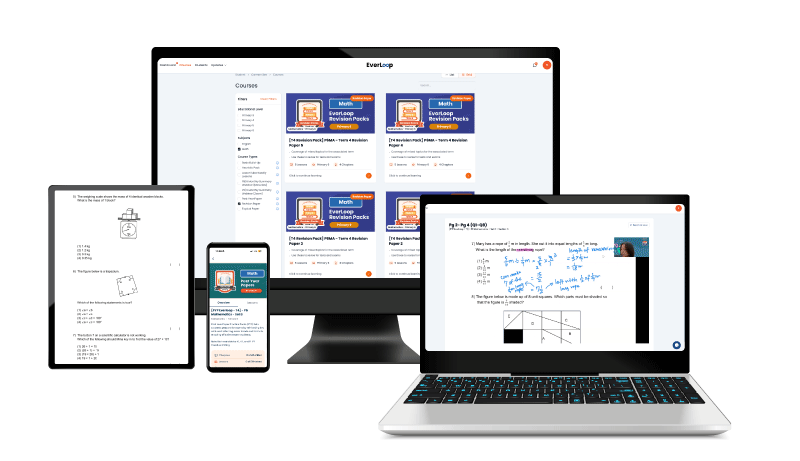
Primary Science students receive five EverLoop modules at no additional charge, alongside weekly lessons and AGrader’s in-house worksheets.

› To Master Exam Formats & Answering Techniques
Practice papers, teaching videos and detailed solutions help students revisit question types and answering techniques.

› To Solidify Fundamental Concepts
Additional practice helps children revisit the fundamental concepts behind their Science learning.

› To Master Each Term’s Learning
Term-specific revision revisits topics covered in Terms 1–4 and gives children opportunities to identify learning gaps.

› To Master a Specific Topic
Targeted practice and teaching videos offer additional explanations and opportunities to revisit a particular topic.

› To Catch Up Missed Lessons or Revisit Lessons
Lesson recordings let children return to missed lessons or revisit what was taught after enrolment.
Meet the team behind AGrader’s Primary Science curriculum.

Ms. Chloe is a passionate Primary Science Tutor who believes that learning should be both engaging and empowering. With over 6 years of experience in education, including curriculum development and classroom teaching, she is dedicated to helping students develop a deep understanding of Science rather than simply memorising facts.

Mr Lim has been a full-time tutor since 2010, accumulating vast experience in teaching students with diverse learning abilities. He employs clear communication during lessons to engage with students and utilizes various pedagogical methods to pique their interests. His area of expertise is in Mathematics and Science, with a keen interest in PSLE preparation. "Education is a lifelong journey and I am passionate to teach the younger generation skills that can prepare them for their future."
Academic Year 2027 · Fees & Schedules
Choose an AGrader centre near you, check fees and schedules, and enquire about available class timings.

Useful answers about Primary 3 Science topics, weekly lessons and home practice.
Our Primary 3 Science syllabus covers living and non-living things, classification of plants, animals, fungi and bacteria, diversity of materials, life cycles of plants and animals, and magnets. P3 introduces Diversity and Cycles in depth and begins Interactions through magnets. These foundations are revisited in P4 and remain relevant to the PSLE.
Science starts as a school subject at Primary 3. Children learn to observe, compare and classify, then apply concepts to MCQs and open-ended questions. Our notes use friendly guide characters, real objects, videos and class activities to make this new subject approachable.
Yes. Each topic starts with a notes lesson and a concept map showing how the key ideas connect. Children receive a one-page cheat sheet at the last topical practice of each topic, plus a full-colour termly infographic at the end of Terms 1, 2 and 3.
Children practise exam-style MCQs and open-ended questions every week, arranged from easier to more difficult. Revision papers mix current and earlier P3 topics. Diagnostic Tests in Terms 2 and 4 are followed by go-through lessons, and EverLoop adds Past Year Paper Practice Packs and revision resources.
In Terms 1–2, the answering technique is built into the question so children see how a complete answer is structured. Each worksheet includes answering-technique pages covering basic keywords, experiment-based questions and topic-specific questions. Open-ended questions are tagged with the technique they need. Teachers help children identify the concept, use relevant science keywords and explain their reasoning. For questions with experiment results, children learn Claim, Evidence and Reasoning (CER).
Selected topics include a hands-on experiment or a teacher demonstration. Other lessons use diagrams, videos and short class activities. From AY2027, each weekly P3 lesson is two hours, with time for interactive activities such as video-guided questions and WordWall games.
AGrader teaches from its own notes and worksheets, supported by concept maps, cheat sheets and revision materials. Preview the P3 learning resources to see these materials, and ask your preferred centre about anything your child should bring to class.
Each worksheet has five extra self-revision questions, with answers and explanations on LessonTube. New topics introduce spelling lists of science words, with a spelling test the next week. Students also receive EverLoop Topical Packs, Revision Packs, Past Year Paper Practice Packs, Basic Build-Up and lesson recordings.
Look at how a programme explains concepts, guides open-ended answers and helps your child revise. Preview the worksheets, check the lesson duration and available timings, and ask how teachers review understanding. You can explore our P3 materials and enquire about trial lessons before deciding.
Use View Fees & Schedules, or contact your preferred AGrader centre about current fees, available P3 Science classes and trial lessons. You can also use Find a Centre to choose a location near you.
Ask about the programme, current class availability and your preferred AGrader centre.