Skip to page content跳至页面内容

AY2027 Registration Is Now Open! Try 4 Lessons
from Just $99. Enquire Now

GOT A QUESTION? Chat with a real person now.

WhatsApp Us

Primary 4 Chinese Tuition小学四年级华文补习

Primary 4 Chinese builds on Primary 3 with richer sentences, more detail in picture compositions and practice in written interaction, comprehension and oral expression.小四华文延续小三的学习范围,逐步丰富句式,增加看图作文的细节,并练习书面互动、阅读理解和口头表达。

No upfront deposit & registration fees无需预付押金或报名费

Preview Our P4 Chinese Worksheets预览小四华文教材Enquire Now立即咨询
Student practising Chinese pronunciation on an AGrader worksheet4 trial lessons promotion

AY2027 Trial Class Promotion2027 学年体验课优惠

Primary 4 Chinese小四华文

Chinese华文P1–P6小一至小六

  • No registration fee无需报名费
  • No upfront deposit无需预付押金

Free EverLoop after-class revision included.包含免费 EverLoop 课后复习。

$129

for 4 lessons四堂体验课

Enquire Now立即咨询

Fees are subject to 9% GST. Promotion valid for registrations from 7 September 2026 onwards.学费另加 9% 消费税。优惠适用于 2026 年 9 月 7 日起报名的学生。

华之佳 Chinese programme

Chinese Tuition for Primary 4: Developing Fuller Expression小四华文补习:学习更完整地表达

When sentences feel repetitive or compositions lack detail, students practise expanding and rewriting sentences, joining ideas with connectors and describing characters. Written-interaction vocabulary and character-trait reference tables support comprehension answers.针对句子单调、作文缺少细节等难点,学生练习扩写、改写、用关联词合并句子和描写人物。书面互动常用词语表及人物性格表则帮助学生组织阅读理解答案。

Textbook-led按课本进度学习step-by-step vocabulary learning循序渐进地学习字词
Maximum 12每班最多 12 人students per class小班学习
EverLoop课后复习系统after-class revision included包含课后复习

The Primary 4 Chinese Learning Programme小四华文课程

What Students Learn in Primary 4 Chinese小四华文的学习重点

Chinese tuition for Primary 4 follows the school textbook sequence while rotating through language use, reading comprehension, picture composition, oral and listening practice.小四华文补习按学校课本进度逐课学习,并轮流安排语文应用、阅读理解、看图作文、口试和听力等课型。

Key Learning Areas主要学习领域

Textbook Reading and Vocabulary课文与字词

Read each text and connect new vocabulary with language practice.逐课朗读课文,把新字词与语文应用练习联系起来。

  • Learn Primary 4 textbook Lessons 1–16 across the year.全年按进度学习小四课文第1至16课。
  • Use short notes to record key learning points.通过小笔记整理学习重点。
  • Receive a spelling sheet after each lesson.每学完一课后领取听写单。

Language Use and Sentence Building语文应用与句式

Move beyond short sentences through focused vocabulary and sentence exercises.通过字词与句式专项练习,逐步丰富句子的表达。

  • Distinguish characters, choose and pair words, and complete cloze passages.练习辨字、词语选择与搭配,以及短文填空。
  • Expand, rewrite and complete sentences; join two sentences with connectors.练习扩写、改写和完成句子,并用关联词合并两句。
  • Make sentences and arrange sentences into paragraphs.练习造句和组句成段。

Reading Comprehension and Written Interaction阅读理解与书面互动

Practise different question formats and organise answers to match the task.练习不同题型,并按题目要求组织答案。

  • Work on multiple-choice, written-interaction and open-ended questions.练习选择题、书面互动题和问答题。
  • Gradually encounter character-trait and reaction questions.逐步接触人物性格题和反应题。
  • Practise changing dialogue into statements.练习把对话改写成陈述句。

Picture Composition with Character Details加入人物细节的看图作文

Develop picture-based stories with guidance on structure and detail.在结构和细节描写的引导下,练习看图写故事。

  • Use the hamburger organiser, the six-question method and transition words.运用汉堡图、六何法和过渡词。
  • Discuss ideas before writing, using connecting sentences, reference questions and prompts.先说后写,借助连接句、参考问题和提示词语组织内容。
  • Work towards a classroom writing target of about 200–350 Chinese characters.按课堂要求,逐步完成约200至350字的作文。

Reading Aloud, Picture Talk and Interaction朗读、看图说话与口语互动

Describe what happens in a picture and express views and feelings.练习描述图片内容,并表达看法和感受。

  • Read short passages aloud.练习朗读短文。
  • Describe pictures through picture-talk practice.通过看图说话练习描述图片。
  • Take part in oral interaction and mock oral practice.参与口语互动和模拟口试练习。

Listening, Review and Assessment听力、复习与测验

Revisit learning through listening activities, composition tests and mock assessments.通过听力练习、作文测验和模拟考,巩固所学内容。

  • Practise listening as part of the rotating class types.在轮转课型中安排听力练习。
  • Complete mid-year and year-end mock assessments with post-exam review.参加年中、年终模拟考,并进行考后点评。
  • Revisit vocabulary during vocabulary-review and general-revision weeks.通过词语复习周和总复习,重温所学字词。
THE LEARNING GOALS学习目标

By the End of Primary 4完成小四课程后

The Primary 4 programme aims to help students develop these skills through regular practice.小四课程通过持续练习,帮助学生逐步朝以下目标迈进。

Our lessons build towards these skills for your child:课程帮助孩子逐步掌握以下能力:

  • Use connectors to expand, rewrite and combine sentences.运用关联词扩写、改写和合并句子。
  • Apply basic answering methods for character-trait, reaction and written-interaction questions.运用人物性格、反应题和书面互动题等题型的基本答题方法。
  • Include character details in picture compositions and work towards the classroom writing target.在看图作文中加入人物细节,并按课堂要求完成相应篇幅。
  • Describe picture content and express views and feelings.描述图片内容,并表达看法和感受。

The first three weeks revisit Primary 3 textbook Lessons 1–17. Primary 4 sentence work, comprehension and writing build a foundation for Primary 5 language-use formats, longer compositions and the introduction of video conversation.开学前三周复习小三课文第1至17课。小四通过句式、阅读理解和写作练习,为小五的语文应用题型、篇幅更长的作文及开始学习的录像会话打基础。

AGrader Chinese learning materials preview

Learning Resources Preview学习资源预览

Preview Our Primary 4 Chinese Worksheets预览小四华文教材

Primary 4 practice is supported by interactive vocabulary slides, teaching videos, character-trait tables, written-interaction vocabulary lists and key-point revision cards. Spelling sheets include QR codes for practice-mode and dictation-mode teaching videos for home revision.小四配有词语教学互动式PPT、教学视频、人物性格表、书面互动词语表及重点知识速记卡。听写单附有“练习模式”和“听写模式”教学视频二维码,方便学生在家复习。

Download P4 Chinese下载小四华文教材

Inside the Classroom走进课堂

Primary 4 Chinese Lessons: From Understanding to Application小四华文课堂:从理解到运用

A Primary 4 language-use lesson follows the text from introduction to practice and consolidation.小四语文应用课围绕课文,从导入逐步进入练习与巩固。

Textbook & Vocabulary Lessons课文与字词课

01

Introduce and Read the Text导入与朗读课文

Begin with an introduction, then read the textbook passage aloud.先进行导入,再朗读课文。

02

Make Short Notes整理小笔记

Record key learning points in short notes.通过小笔记记录学习重点。

03

Practise Language Use and Sentences语文应用与句式练习

Apply vocabulary and work on sentence expansion, rewriting and other sentence formats.运用所学字词,并练习扩写、改写等句式题型。

04

Work on Comprehension练习阅读理解

Complete comprehension practice as part of the language-use lesson.在语文应用课中进行阅读理解练习。

05

Consolidate through Spelling通过听写巩固

Finish the lesson sequence with spelling practice.通过听写巩固本课所学字词。

Composition Lessons作文课

Use the hamburger organiser, six-question method, transition words and picture analysis. Short writing tasks lead into a full composition, followed by appreciation of model writing.通过汉堡图、六何法、过渡词和图片解析组织内容,从小练笔进入完整作文,之后进行佳作欣赏。

Oral Practice口试练习

Practise passage reading, picture talk and oral interaction, with mock oral assessments in the learning route.练习朗读短文、看图说话和口语互动,并按学习路线安排模拟口试。

Written-Interaction Guidance书面互动答题指导

Identify the task, choose the appropriate person and tone, and answer clearly within the given situation. Practise both content and expression.先确认题目要求,再注意人称和语气,围绕所给情境清楚作答,并从内容和表达两方面练习。

Tests and Post-Exam Review测验与考后点评

Composition tests and mid-year and year-end mock assessments provide practice, with post-exam review to revisit the questions.通过作文测验、年中和年终模拟考进行练习,并在考后点评中重温试题。

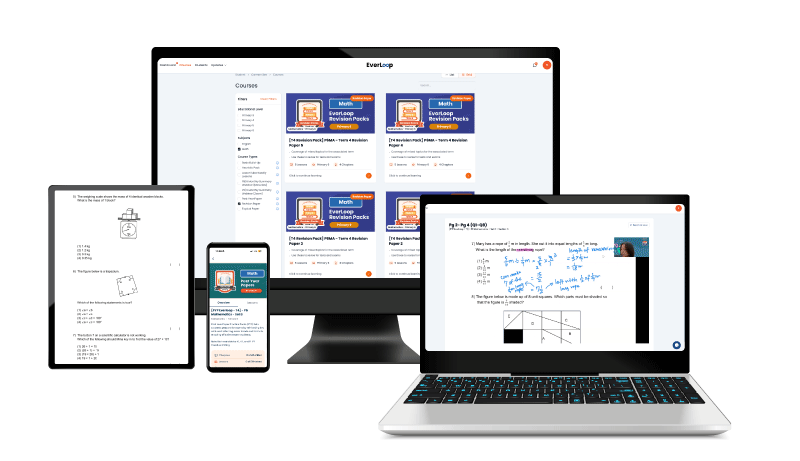
EverLoop revision resources shown across several devicesEverLoop

EverLoop After-Class Revision System
Complimentary with Every EnrolmentEverLoop 课后复习系统,随课程免费提供

Chinese students can revisit learning through the EverLoop resources listed below, alongside their weekly lessons and AGrader’s own worksheets.除了每周课堂和 AGrader 自编练习,华文学生也可使用以下 EverLoop 资源重温所学。

Past Year Paper Practice Packs (PYP)

Past Year Paper Practice Packs (PYP)历届考卷练习包(PYP)

Practise Question Formats & Answering Methods熟悉题型与答题方法

Practice papers, teaching videos and detailed solutions give children more opportunities to revisit question types and check their understanding.通过练习卷、教学视频与详尽解答,帮助学生重温题型并检查理解。

Topical Packs

Topical Packs主题练习包

Revisit a Specific Topic针对特定课题复习

Targeted practice and teaching videos offer further explanations and practice for topics your child wants to revisit.针对性的练习与教学视频,为需要重温的课题提供进一步讲解与练习。

LessonTube

LessonTube课程回放

Catch Up or Revisit a Lesson补上缺席课程或重温所学

Lesson recordings let children catch up on missed classes or revisit what was taught after enrolment.学生可通过课程回放补上缺席的课程,或重温报名后课堂所教的内容。

Don’t Just Take Our Words For It
Check Out What Other Parents Said About Us听听其他家长对 AGrader 的评价

Enquire Now立即咨询

Academic Year 2027 · Fees & Schedules2027 学年 · 学费与课表

Find Your Primary 4 Chinese Class查询小四华文课程

Find a convenient AGrader centre, check fees and schedules, and ask about Primary 4 Chinese class availability at your preferred branch.选择方便的 AGrader 中心,查询学费与时间表,并了解心仪分校的小四华文班名额。

AGrader centre location map

Frequently Asked Questions常见问题

Useful answers about the curriculum, weekly lessons and home practice.了解课程内容、每周课堂和课后练习。

How does Primary 4 Chinese differ from Primary 3?小四华文与小三有什么不同?

Primary 4 builds on Primary 3 with richer sentences, more detail in picture compositions, and more practice in written interaction, comprehension and oral expression. The first three weeks revisit Primary 3 textbook Lessons 1–17 before new question types are developed.小四在小三基础上丰富句式,加强看图作文的细节描写,并增加书面互动、阅读理解与口语表达练习。首三周复习小三课本第1至17课,再进一步学习新题型。

What does Primary 4 Chinese tuition cover?小四华文补习涵盖哪些内容?

Lessons follow the textbook sequence (Lessons 1–16) and rotate through language use and sentence building, reading comprehension and written interaction, picture composition, oral practice and listening, with tests and mock assessments across the year.课程按照课本第1至16课的顺序,轮流练习语文应用与句子、阅读理解与书面互动、看图作文、口试和听力,全年也安排测验与模拟考。

How are students guided in written interaction?如何引导学生完成书面互动题?

Students learn to identify the task, choose the appropriate person and tone, and answer clearly within the given situation, practising both content and expression. Written-interaction vocabulary lists and character-trait tables support their answers.学生学习理解任务要求,选择合适的人称和语气,并根据情境清楚作答,同时练习内容组织与表达。书面互动常用词语表和人物性格表辅助作答。

How much do students write in Primary 4 composition practice?小四作文练习要写多少字?

Picture compositions work towards a classroom writing target of about 200–350 Chinese characters, planned with a hamburger organiser, the six-question method and transition words, with a focus on character and scene details.看图作文的课堂目标约为200至350字,学生运用汉堡图、六何法和过渡词构思,重点练习人物和场景的细节描写。

Does Primary 4 oral practice use pictures or videos?小四口试用图片还是录像?

Primary 4 oral practice uses reading aloud, picture talk and oral interaction, together with mock oral practice. Video conversation is introduced later, in Primary 5.小四口试练习包括朗读短文、看图说话和口语互动,并安排模拟口试。录像会话到小五才开始学习。

When are the Primary 4 mock assessments?小四何时安排模拟考?

Mid-year and year-end mock assessments are held, each followed by post-exam review. Composition tests are also included during the year.年中和年终各安排一次模拟考,每次考后都有点评。全年也安排作文测验。

What resources support revision at home?有哪些资源支持居家复习?

Resources include interactive vocabulary slides, teaching videos, character-trait tables, written-interaction vocabulary lists and key-point revision cards. Spelling sheets carry QR codes for practice-mode and dictation-mode videos, and enrolment includes the EverLoop after-class revision system.资源包括互动词语课件、教学视频、人物性格表、书面互动常用词语表和重点复习卡。听写单附有练习模式和听写模式视频二维码,报名也包含 EverLoop 课后复习系统。
Let’s Talk About Your Child’s Next Step一起了解孩子下一步的学习安排

Ask about the programme, current class availability and your preferred AGrader centre.欢迎咨询课程内容、现有班级名额及您心仪的 AGrader 分行。

Enquire Now立即咨询