Skip to page content

AY2027 Registration Is Now Open! Try 4 Lessons
from Just $99. Enquire Now

GOT A QUESTION? Chat with a real person now.

WhatsApp Us

Primary 1 Maths
Tuition Centre in Singapore

Number sense your child can touch: counting, number bonds and first story sums. Our Primary 1 Maths tuition builds these foundations through weekly two-hour lessons, hands-on activities and games in AY2027.

No upfront deposit & registration fees

Preview Our P1 Maths WorksheetsEnquire Now
Student listening in an AGrader classroom4 trial lessons promotion

AY2027 Trial Class Promotion

Primary 1 Math

MathP1–P6

  • No registration fee
  • No upfront deposit

Free EverLoop after-class revision included.

$129

for 4 lessons

Enquire Now

Fees are subject to 9% GST. Promotion valid for registrations from 7 September 2026 onwards.

AGrader Math programme

How Our Maths Tuition for Primary 1
Supports Your Child

The move from Kindergarten to Primary 1 brings new numbers, calculations and story sums. Our lower primary Maths tuition starts with things children can hold and move, then connects these experiences to pictures and numbers. Number bonds build the part-whole understanding children use in later model drawing. This course is part of our Primary Math programme, covering P1–P6.

2 hoursper weekly lesson in AY2027
Maximum 12students per class
EverLoopafter-class revision included

The AY2027 Primary 1 Learning Programme

What Your Child Will Learn in Primary 1 Math

Numbers come in three steps: to 10, to 20 and to 100. Each new idea begins with hands-on exploration before children work with pictures and numbers. Our P1 programme builds these foundations across five learning areas.

Five Key Learning Areas

Numbers & Number Bonds

Build number sense with objects children can hold, count and move.

  • Numbers to 10, then 20 and 100
  • Read, write, spell, compare and order numbers
  • Ordinal numbers: first, second, third and beyond
  • Number bonds: see the parts that make a whole

Addition & Subtraction

Connect counting and number bonds to calculations and simple stories.

  • Add and subtract within 10, then within 100
  • Practise counting on and using number bonds
  • Make up addition and subtraction stories
  • Solve first story sums using the part-whole idea

Multiplication & Division

Meet the first ideas of multiplication and division through practical activities.

  • Make and count equal groups
  • Explore sharing and grouping objects equally
  • Use snap blocks and flash cards
  • Connect hands-on activities to written questions

Length, Time & Money

Explore everyday measurement with familiar objects and learning tools.

  • Measure length using a measuring tape and string
  • Tell the time to 5 minutes
  • Count money and practise with play money

Shapes & Picture Graphs

Recognise shapes and make sense of information presented in pictures.

  • Explore 2D shapes
  • Use a geoboard for shape activities
  • Build picture graphs with stickers
  • Read information from picture graphs

The Year at a Glance

From Numbers to 10 to Everyday Maths

The AY2027 plan connects each term’s topics with hands-on materials, helping children explore new ideas before writing them down.

Term 1

Numbers to 10 & First Number Bonds

K1–K2 revision; Numbers to 10; Number Bonds; Addition and Subtraction within 10; Shapes.

Hands-on materials: Double-sided counters, snap blocks and a geoboard.

Term 2

Numbers to 20, Then Numbers to 100

Ordinal Numbers; Numbers to 20; Picture Graphs; Numbers to 100.

Hands-on materials: An addition and subtraction spinner, stickers, dice and flash cards.

Term 3

Calculations, Length & Equal Groups

Addition and Subtraction within 100; Length; Multiplication; Division.

Hands-on materials: Dice, a measuring tape, string and snap blocks.

Term 4

Sharing, Time & Money

Multiplication and Division; Time; Money.

Hands-on materials: Multiplication flash cards, a plastic clock and play money.

Applying What They Learn

From Number Bonds to First Story Sums

Children explore how parts make a whole, use counting on and number bonds to add and subtract, then make up their own addition and subtraction stories. They work towards solving simple story sums with an understanding of what the numbers mean.

THE LEARNING GOALS

By the End of Primary 1

From counting objects to solving simple story sums.

Our lessons build towards these skills for your child:

  • Count, read and write numbers to 100.
  • Use number bonds to add and subtract.
  • Make up and solve simple story sums.
  • Tell the time and count money.
  • Read information from a picture graph.
AGrader Primary Math learning-resource preview

Learning Resources Preview

Preview Our Primary 1 Maths Worksheets

Take a closer look at our P1 Maths worksheets and learning materials before enquiring about classes. The link below opens the Primary 1 preview from our Primary Math programme page.

Download P1 Math

Inside the Classroom

What to Expect from Our P1 Maths Tuition

Children attend one two-hour lesson a week across four terms and a 50-week programme. In AY2027, the extra time in P1 lessons is used for maths games and hands-on activities. A written lesson plan guides the teaching and practice.

01

Explore with Hands-On Materials

Children meet new ideas through snap blocks, counters, dice, a clock or play money before moving to pictures and numbers. The extra lesson time in AY2027 supports more games and hands-on activities.

02

See an Example, Then Have a Go

Notes and a worked example introduce the concept. Children attempt questions on their own before the teacher goes through them question by question.

03

Practise Through Games & Review

Most lessons include a Kahoot! or Wordwall game. Each lesson ends with a summary of the key ideas, helping children revisit what they have learnt.

04

Build a Home Practice Habit

From AY2027, each worksheet ends with a 12-mark drilling section of short exam-style questions. Children complete it at home or in class if they finish earlier, and correct answers earn Bonus Bucks.

Revision That Revisits the Basics

Termly revision and Diagnostic Tests in Terms 2 and 4 help teachers check understanding. Each test is followed by a go-through lesson for corrections and re-teaching.

Support for Practice at Home

Summary Cheat Sheets, Topical Quizzes and Revision Quizzes help children revisit concepts. Teaching videos linked by QR codes and walkthrough videos for harder questions and drilling sets help them check their working.

Parents Kept Informed

A weekly lesson summary tells parents what was covered and what to finish at home. LessonTube recordings and EverLoop resources provide further opportunities to revisit the learning.

EverLoop revision resources shown across several devices

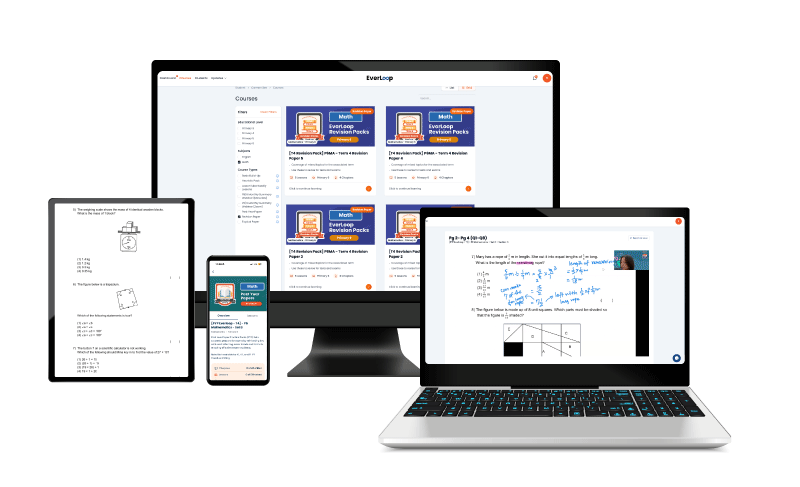
EverLoop After-Class Revision System
Complimentary with Every Enrolment

Primary Math students receive five EverLoop modules at no additional charge, alongside weekly lessons and AGrader’s in-house worksheets.

Past Year Paper Practice Packs (PYP)

Past Year Paper Practice Packs (PYP)

› To Practise Question Formats & Answering Techniques

Practice papers, teaching videos and detailed solutions give children more opportunities to revisit question types and check their working.

Basic Build-Up

Basic Build-Up

› To Strengthen Fundamental Concepts

Specially developed practice questions help children revisit core Mathematics concepts and strengthen their foundations.

Revision Packs

Revision Packs

› To Revisit Each Term’s Learning

Term-specific revision covers topics taught in Terms 1–4, giving children opportunities to identify gaps and practise weaker areas.

Topical Packs

Topical Packs

› To Practise a Specific Topic

Targeted practice papers and teaching videos offer additional explanations and practice for topics your child wants to revisit.

LessonTube

LessonTube

› To Catch Up or Revisit a Lesson

Lesson recordings let children return to missed lessons or revisit what was taught after enrolment.

Learn More

Meet Our Primary Math Curriculum Team

Teacher Felicia Tham

Teacher Felicia Tham

Felicia is a Math teacher and curriculum writer at AGrader. She graduated from the National University of Singapore with a double major in Economics and Psychology. With 10 years of teaching experience, Felicia is well versed in the primary Math syllabus. She has helped her students excel by helping them understand the problems in a systematic and clear manner. She is also well-liked by her students for being caring and patient.

Don’t Just Take Our Words For It
Check Out What Other Parents Said About Us

Enquire Now

Academic Year 2027 · Fees & Schedules

Find a P1 Maths Tuition Centre Near You

Looking for a Primary 1 Maths tuition centre in Singapore? Explore AGrader locations, check fees and schedules, and ask about available P1 classes at your preferred branch.

AGrader centre location map

Frequently Asked Questions

Useful answers about the curriculum, weekly lessons and home practice.

What will my child learn in Primary 1 Maths tuition?

The P1 programme covers numbers to 100, ordinal numbers, number bonds, addition and subtraction within 100, first multiplication and division through equal groups and sharing, length, time, money, 2D shapes, and picture graphs. Children learn with hands-on materials before moving to pictures and written questions.

How are P1 problem sums introduced?

Children begin with number bonds and the idea that parts make a whole. They use counting and number bonds to make up and solve simple addition and subtraction stories. These foundations prepare them for model drawing in later primary levels.

How long is each P1 Math lesson?

In AY2027, children attend one two-hour lesson each week, across four terms and a 50-week programme. P1 lessons have grown from about one and a half hours to two hours, with the extra time used for maths games and hands-on activities.

Does the programme include maths enrichment for Primary 1?

Hands-on activities and games give children different ways to explore the P1 concepts. They use counters and snap blocks for number sense, a geoboard for shapes, and a clock and play money for everyday maths. These activities sit alongside worked examples, individual practice and review.

What homework and revision will my child receive?

Each worksheet includes a 12-mark drilling section from AY2027, completed at home or in class if your child finishes earlier. Correct answers earn Bonus Bucks. Summary Cheat Sheets, quizzes and teaching videos support revision, alongside complimentary EverLoop resources and LessonTube recordings.

How do teachers check my child’s understanding?

Children have termly revision and two Diagnostic Tests, in Terms 2 and 4. Each test is followed by a go-through lesson for corrections and re-teaching. Parents receive a weekly lesson summary explaining what was covered and what to finish at home.

Can I preview your Primary 1 Maths worksheets?

Yes. Use Download P1 Math in the learning-resources section to open the P1 Maths worksheets and materials preview linked from our Primary Math programme page.

Where can I find a P1 Maths tuition centre in Singapore?

Use Find a Centre to explore AGrader locations, then check View Fees & Schedules or enquire about P1 Maths tuition at your preferred branch. Preview the learning materials and ask about trial lessons before choosing a Primary 1 Maths tuition centre.

Let’s Talk About Your Child’s Next Step

Ask about the programme, current class availability and your preferred AGrader centre.

Enquire Now