

Energy Forms, Uses & Conversion
Explain how energy is used and changes from one form to another.
- Energy Forms and Uses, including photosynthesis
- Energy Conversion
- Apply energy concepts to everyday situations
AY2027 Registration Is Now Open! Try 4 Lessons
from Just $99. Enquire Now
GOT A QUESTION? Chat with a real person now.
WhatsApp UsBring four years of Science together for the PSLE. Our P6 Science tuition covers energy, forces and environmental interactions, with P3–P6 revision and practice in explaining answers clearly.
No upfront deposit & registration fees
Preview Our P6 Science WorksheetsEnquire Now
AY2027 Trial Class Promotion
ScienceP3–P6
Free EverLoop after-class revision included.
Fees are subject to 9% GST. Promotion valid for registrations from 7 September 2026 onwards.

Our PSLE Science tuition in Singapore combines the final P6 topics with revision of P3–P5 from Week 1. Clear concept teaching, experiment-based questions and structured answering practice help your child prepare steadily up to the PSLE. This course is part of our Primary Science tuition in Singapore for P3–P6.
The Primary 6 Science Syllabus
The P6 Science syllabus adds Energy and Interactions topics, then brings all five themes together through P3–P6 revision. Alongside these P6 Science topics, children design fair tests, interpret linked questions and practise explaining results using concepts, evidence and reasoning.
Explain how energy is used and changes from one form to another.
Understand how forces act on objects and use the relevant concept to explain what happens.
Connect living things, their surroundings and the impact of human activities.
Plan investigations and interpret evidence across linked questions.
Bring four years of Science together through revision and exam-format practice.
The P6 Learning Plan · Up to the PSLE
Learn the remaining topics and revisit all four years through topical practice, mixed revision and PSLE-format papers.
Revision of P3–P5 topics; Energy Forms and Uses, including photosynthesis; Energy Conversion; Interaction of Forces.
Interactions within the Environment: Living Together; Food Chains and Food Webs; Term 2 Diagnostic Test.
Adaptations; Man and Its Impact on the Environment; revision of all topics by theme.
PSLE revision and Term 4 Diagnostic Test, up to the PSLE.
Term 1 follows the AY2027 plan. Terms 2–4 follow the AY2026 topic order while the AY2027 plan is being finalised; the topics themselves will not change. P6 runs up to the PSLE.
From understanding the final topics to applying four years of Science in a PSLE-format paper.
Our lessons build towards these skills for your child:
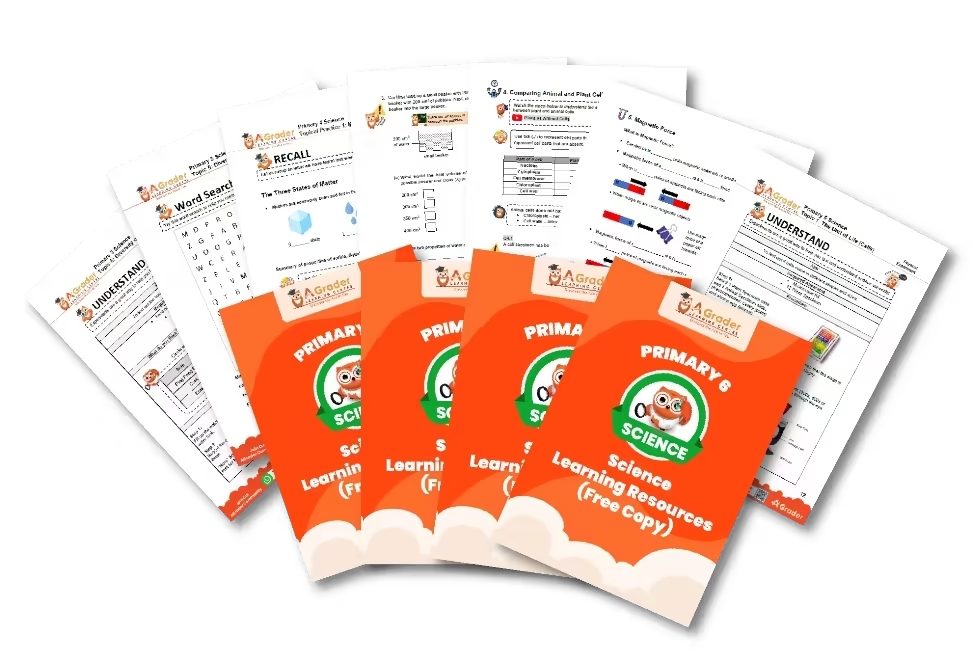
Learning Resources Preview
Preview our P6 notes and question practice, supported by concept maps, one-page cheat sheets and termly infographics. See how concepts, answering techniques and revision fit together.
Download P6Inside the Classroom
One 2-hour lesson a week gives your child time to understand, practise and review, with the P6 programme running up to the PSLE. Our primary school science tuition in Singapore connects concepts to explanations, investigation skills and exam-format practice.
Diagrams, videos, selected experiments and practice develop understanding of energy, forces and environmental interactions. Each topic moves from notes to topical practice and mixed revision.
P3–P5 topics are revised from Week 1. Revision papers bring P3–P6 together, and each paper points children to the worksheets to revisit when a question is difficult.
Booklet A practice includes 30 MCQs (60 marks), including linked MCQs that share an experiment or scenario. Booklet B practice includes 10–11 structured questions (40 marks).
Children practise PSLE-standard answering techniques across topics, including designing a fair test and explaining results. Diagnostic Tests, quizzes and progress reports show what to revise next, up to the PSLE.
Booklet A has 30 MCQs (60 marks), while Booklet B has 10–11 structured questions (40 marks). Children practise linked MCQs and explain their reasoning in open-ended responses.
Children practise designing a fair test, using control set-ups and interpreting results across linked questions. Claim, Evidence and Reasoning (CER) helps them connect an answer to the data and the relevant concept.
Every worksheet includes five extra self-revision questions. Children can check the answers and explanations on LessonTube and replay lesson videos through QR codes and clickable links.
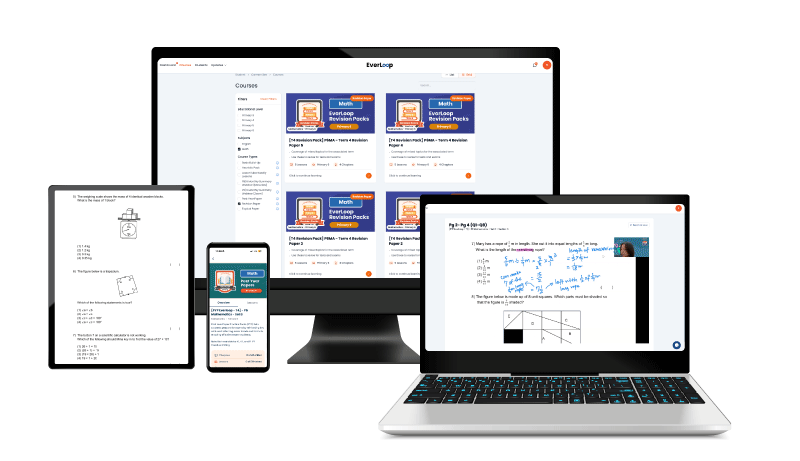
Primary Science students receive five EverLoop modules at no additional charge, alongside weekly lessons and AGrader’s in-house worksheets.

› To Master Exam Formats & Answering Techniques
Practice papers, teaching videos and detailed solutions help students revisit question types and answering techniques.

› To Solidify Fundamental Concepts
Additional practice helps children revisit the fundamental concepts behind their Science learning.

› To Master Each Term’s Learning
Term-specific revision revisits topics covered in Terms 1–4 and gives children opportunities to identify learning gaps.

› To Master a Specific Topic
Targeted practice and teaching videos offer additional explanations and opportunities to revisit a particular topic.

› To Catch Up Missed Lessons or Revisit Lessons
Lesson recordings let children return to missed lessons or revisit what was taught after enrolment.
Meet the team behind AGrader’s Primary Science curriculum.

Ms. Chloe is a passionate Primary Science Tutor who believes that learning should be both engaging and empowering. With over 6 years of experience in education, including curriculum development and classroom teaching, she is dedicated to helping students develop a deep understanding of Science rather than simply memorising facts.

Mr Lim has been a full-time tutor since 2010, accumulating vast experience in teaching students with diverse learning abilities. He employs clear communication during lessons to engage with students and utilizes various pedagogical methods to pique their interests. His area of expertise is in Mathematics and Science, with a keen interest in PSLE preparation. "Education is a lifelong journey and I am passionate to teach the younger generation skills that can prepare them for their future."
Academic Year 2027 · Fees & Schedules
Choose an AGrader centre near you, check fees and schedules, and enquire about available class timings.

Useful answers about P6 Science topics, PSLE preparation, weekly lessons and home revision.
The P6 Science syllabus covers energy forms and uses, including photosynthesis, energy conversion, forces and interactions within the environment. P6 Science topics include living together, food chains and food webs, adaptations, and human impact on the environment. Revision brings all five PSLE Science syllabus themes together across P3–P6.
Our P6 Science tuition teaches the remaining topics and brings earlier learning together through mixed revision. P3–P5 topics are revised from Week 1, while answering techniques are practised to PSLE standard across topics. Revision papers identify the worksheets children can revisit when they need help.
Term 1 revisits P3–P5 and covers energy and forces. Term 2 covers living together, food chains and food webs. Term 3 covers adaptations, human impact and revision by theme. Term 4 focuses on PSLE revision up to the examination. Term 1 follows AY2027; Terms 2–4 use the AY2026 order while the AY2027 plan is being finalised.
The official SEAB format from 2026 has Booklet A with 30 MCQs worth 60 marks, and Booklet B with 10–11 structured questions worth 40 marks. These include open-ended responses requiring children to explain their reasoning. Children answer both booklets in 1 hour 45 minutes. Our science tuition for PSLE includes practice in this format.
Linked MCQs are questions that share one experiment or scenario. Children practise reading the set-up carefully, identifying what each question tests and using the relevant data and concept, rather than treating every question as an unrelated item.
Our PSLE Science answering technique practice develops clear explanations across topics. Children identify the relevant concept, interpret the information and explain the result. For experiment results, Claim, Evidence and Reasoning (CER) helps link a claim to the data and concept. Practice also includes variables, fair tests and control set-ups.
Children use AGrader’s own notes and worksheets, concept maps, one-page cheat sheets and full-colour termly infographics. If you are looking for PSLE Science sketchnotes or visual summaries, preview our P6 resources to see how our concept maps and revision materials present the ideas.
Start with the concept map or cheat sheet, attempt the worksheet’s five self-revision questions and review the answers and explanations on LessonTube. Revisit the worksheets flagged in revision papers and use the appropriate EverLoop packs to practise topics that need more attention. These PSLE Science tips make revision a regular routine.
Weekly worksheets include MCQs and open-ended questions, with five extra self-revision questions and LessonTube answers and explanations. EverLoop adds Past Year Paper Practice Packs, teaching videos and detailed solutions so children can check their understanding and revisit difficult question types.
Look for clear concept teaching, revision of earlier topics, practice with explanation and investigation questions, and feedback that shows what to work on next. Preview our P6 worksheets and ask about lesson structure, class size and after-class revision support when deciding whether the programme suits your child.
Children attend one two-hour lesson each week, with a maximum of 12 students per class. The P6 programme runs up to the PSLE. Ask your preferred centre about its P6 timetable, lesson dates and available class timings.
Every worksheet has five extra self-revision questions, with answers and explanations on LessonTube. Students receive five EverLoop modules: Past Year Paper Practice Packs, Basic Build-Up, Revision Packs, Topical Packs and LessonTube. Lesson recordings let children catch up or revisit explanations.
Use View Fees & Schedules or contact your preferred primary science tuition centre about current fees, P6 class timings and trial availability. Use Find a Centre to choose an AGrader location near you.
Ask about the programme, current class availability and your preferred AGrader centre.