Skip to page content

Creative Writing
for Primary 6

in Singapore

Use the full writing toolkit with control: develop a convincing climax, choose details that serve the story and respond clearly to situational writing tasks.

No upfront deposit & registration fees

Preview Our P6 Writing WorksheetsEnquire Now
A student working through a composition worksheet at an AGrader classroom desk4 trial lessons promotion

AY2027 Trial Class Promotion

Primary 6 Creative Writing

Creative WritingP3–P6

  • No registration fee
  • No upfront deposit

Free EverLoop after-class revision included.

$129

for 4 lessons

Enquire Now

Fees are subject to 9% GST. Promotion valid for registrations from 7 September 2026 onwards.

Creative Writing programme

How Our Primary 6 Creative Writing
Supports Your Child

One two-hour lesson each week brings together 15 two-week composition themes and 10 situational writing lessons across four terms. The 45-week programme finishes before the PSLE written papers. Primary 6 Creative Writing is the final stage of Creative Writing across P3–P6 at AGrader.

2 hoursper weekly lesson
Maximum 12students per class
EverLoopafter-class revision included

The AY2027 Primary 6 Creative Writing Programme

What Your Child Will Learn in Creative Writing for Primary 6

Our creative writing for Primary 6 builds on the P5 toolkit through fresh themes. Students revisit every composition skill at least twice, refining nine openings, STEAL characterisation, sentence variety, figurative language and reflective endings while practising both parts of PSLE Paper 1.

Five Key Learning Areas

Controlled Stories & Openings

Plan the payoff early and give the most important moment the space it needs.

  • Plan on five plot-mountain cards: introduction, rising action, climax, falling action and conclusion
  • Plant every payoff, consider the cost of the solution and give the most lines to the climax
  • Choose from nine openings: action, dialogue, character, sound, setting, weather, thought, question and flashback
  • End the introduction with a hint at what is coming

STEAL Characters & Showing Feelings

Make characters and mood convincing through precise, purposeful details.

  • Use STEAL: Speech, Thoughts, Effect on others, Actions and Looks
  • Vary speech and thinking tags
  • Show feelings in original phrases without relying on plain feeling words
  • Sustain a mood across a whole paragraph

Sentence Variety & Figurative Language

Choose sentence patterns and language devices for the effect the story needs.

  • Use VSS: mix sentence starters, including -ing and -ed starters
  • Combine sentences, use groups of three and vary sentence length for effect
  • Draw on all six devices: simile, metaphor, idiom, sound words, personification and hyperbole
  • Combine two figurative devices where they fit the theme

Dilemmas & Reflective Endings

Develop an inner argument and bring it to a close with a reflection that belongs to the story.

  • Show an inner argument that changes direction
  • Connect the character’s dilemma to the lesson at the end
  • Choose only the ending beats the story needs
  • Echo the opening or close with a fitting proverb

Situational Writing

Respond to each task with a clear purpose, the right audience in mind and an appropriate tone.

  • Practise informal and formal writing, reports and articles
  • Complete separate report and article tasks within the same Reporticle lesson
  • Apply purpose, audience and context checks to each response
  • Revisit task types through mixed practice and a summary lesson

AY2027 · Themes Across Four Terms

Composition Writing: Themes by Term

Fifteen composition themes give students fresh contexts for practising familiar skills. Each theme runs over two weeks, with a first draft followed by feedback and corrections. The composition target is at least 150 words.

Term 1

Refine the PSLE Writing Toolkit

Revisit openings, STEAL characterisation, dilemmas, showing feelings and figurative language through five fresh themes.

  • A PromiseIntroductions
  • Being BraveSTEAL characterisation
  • A Difficult DecisionDilemma
  • A SurpriseShow, not tell
  • A Long WaitFigurative language
Term 2

Choose Sentences, Openings & Endings

Practise sentence variety and conclusions, revisit controlled introductions and begin a dilemma theme that continues into Term 3. A PSLE-format Diagnostic Test provides a point for review.

  • A Considerate ActVarying sentence structure
  • Something SpecialConclusion
  • A ChallengeIntroductions
  • Being HonestDilemma
Term 3

Make Every Detail Serve the Story

Complete Being Honest, then revisit feelings, STEAL, sentence variety, figurative language and conclusions. Students practise choosing the details and devices each story needs.

  • Being Honest (continued from Term 2)Dilemma
  • A RegretShow, not tell
  • Being EmpatheticSTEAL characterisation
  • Being HelpfulVarying sentence structure
  • FairnessFigurative language
  • A Close ShaveConclusion
Term 4

Consolidate Before the Written Papers

Return to sentence variety with A Generous Act and review both writing components through the Term 4 Diagnostic Test and go-through lesson. The programme ends in Week 45, before the PSLE written papers.

  • A Generous ActVarying sentence structure

Themes are shown by term in teaching order and may be adjusted during the year. Being Honest continues from Term 2 into Term 3 and counts as one theme. Situational writing lessons take place between composition themes.

10 Dedicated Lessons

Situational Writing: Formats & Practice

P6 revisits purpose, audience, context and tone across 10 situational writing lessons. Reporticle covers separate report and article tasks in one lesson, while mixed tasks give students practice choosing the right response for a new situation.

  • Informal writing · 2 lessons
  • Formal writing · 2 lessons
  • Report · 1 lesson
  • Article · 1 lesson
  • Reporticle (separate report and article tasks) · 1 lesson
  • Mixed tasks · 2 lessons
  • Summary · 1 lesson
THE LEARNING GOALS

By the End of Primary 6

By the end of Primary 6, students work towards using their writing skills selectively and completing both composition and situational writing with practised PSLE Paper 1 timing.

Our lessons build towards these skills for your child:

  • Plan a story where every payoff is planted and the most lines go to the climax.
  • Open with control and end the introduction with a hint at what is coming.
  • Build characters with STEAL and varied speech and thinking tags.
  • Show feelings and mood in original phrases, without plain feeling words.
  • Combine figurative devices where they fit the theme.
  • End with a reflection that echoes the opening.
  • Complete situational writing tasks with the right purpose, audience and tone, and sit Paper 1 with practised timing.
AGrader Creative Writing worksheet preview

Learning Resources Preview

Preview Our Primary 6 Creative Writing Worksheets

Explore how the P6 materials connect a theme-specific word bank, story planning, a named writing skill and corrections to the first draft.

Download P6 Creative Writing

Plan, Write, Review and Improve

Inside Our P6 English Creative Writing Class

The year begins with a review of writing skills, the PSLE marking scheme and six common pitfalls. Each composition then follows a two-week cycle, with situational writing lessons interspersed throughout the programme.

01

Week 1 · Explore & Plan

Work through the theme’s Good Phrases Toolbox, unpack the question and pictures, and revisit one named writing skill. Plan the story on five plot-mountain cards before writing.

02

Week 1 · Write the First Draft

Develop the plan into a composition of at least 150 words, with about 40 minutes for writing. Plant the payoff and give the climax the most space.

03

Week 2 · Review & Correct

Take a dictation test, recap the skill and study feedback alongside an annotated model composition. Use the Composition Corrections page to improve the first draft step by step.

04

Between Themes · Situational Writing

Ten situational writing lessons are interspersed between composition themes. Practise informal writing, formal writing, reports and articles, including separate report and article tasks within the same Reporticle lesson. Consolidate with mixed practice and a summary lesson.

Five Cards Before the First Draft

The planning cards follow the plot mountain: introduction, rising action, climax, falling action and conclusion. Questions written for each theme help students work out what happens and why.

A Fresh Word Bank for Each Theme

Every theme has a Good Phrases Toolbox with phrases to borrow and adapt, a Word Meanings box and a word bank video. A dictation test the following week reinforces the vocabulary. P6 students practise expressing feelings and mood in original phrases that fit their story.

Diagnose, Re-teach and Keep Parents Informed

Diagnostic Tests in Terms 2 and 4 follow the PSLE Paper 1 format: 50 marks in 1 hour 10 minutes. Each is followed by a go-through lesson to review the writing and revisit skills that need attention.

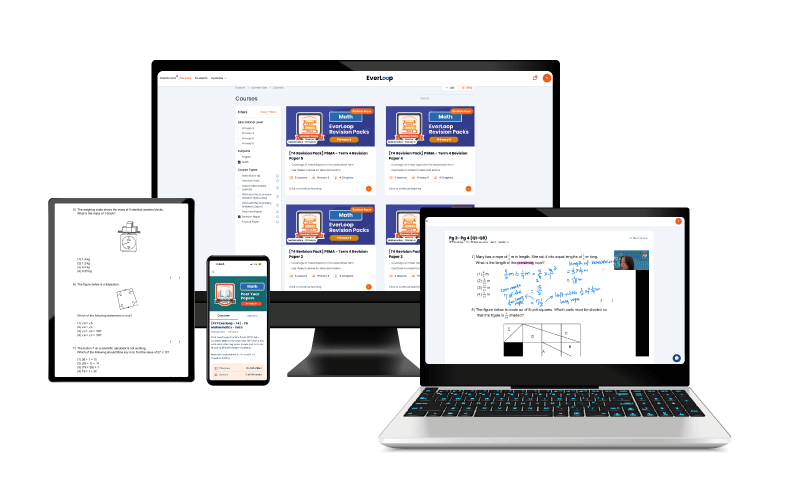
EverLoop revision resources shown across several devicesEverLoop

EverLoop After-Class Revision System
Complimentary with Every Enrolment

Primary 6 Creative Writing enrolment includes three EverLoop modules at no extra charge: Past Year Paper Practice Packs, Revision Packs and LessonTube.

Past Year Paper Practice Packs (PYP)

Past Year Paper Practice Packs (PYP)

› Practise Exam Questions

School-paper questions, video guidance and worked solutions give students practice with exam tasks.

Revision Packs

Revision Packs

› Review the Term’s Work

Term-based packs revisit the year’s topics and help students spot areas that need more practice.

LessonTube

LessonTube

› Catch Up and Revisit Lessons

Recorded lessons let students review class learning or catch up after an absence.

Meet Our Creative Writing Academic Team

Teacher Rachel Sim

Teacher Rachel Sim

Ms Rachel has taught in both secondary school and tuition-centre settings. She focuses on usable strategies and engaging classroom activities to help students develop their foundations and apply what they learn with confidence.

Don’t Just Take Our Words For It
Check Out What Other Parents Said About Us

Enquire Now

Academic Year 2027 · Fees & Schedules

Find Your Primary 6 Creative Writing Centre

Choose an AGrader centre near you, check fees and schedules, and enquire about available class timings.

AGrader centre location map

Frequently Asked Questions

Useful answers about story writing, the two-week lesson cycle and home practice.

What does creative writing for Primary 6 cover?

P6 refines composition and situational writing for PSLE Paper 1. Students practise controlled openings, STEAL characterisation, original expressions of feelings and mood, dilemmas, sentence variety, figurative language and reflective endings. Every composition skill is revisited at least twice on fresh themes before the exam.

How does P6 Creative Writing build on P5?

P6 uses the full P5 toolkit with greater control. Students plant every payoff, give the most lines to the climax, vary speech and thinking tags, sustain mood across a paragraph and combine figurative devices where they fit. They also complete separate report and article tasks within a single Reporticle lesson.

How many themes are covered, and how much will my child write?

The programme includes 15 two-week composition themes and 10 situational writing lessons. The composition target is at least 150 words. Being Honest spans Terms 2 and 3 and counts as one composition theme.

Which story openings will my child practise?

Students revisit all nine openings: action, dialogue, character, sound, setting, weather, thought, question and flashback. The P6 focus is choosing an opening that suits the story and ending the introduction with a hint at what is coming.

How does the two-week composition cycle work?

In Week 1, students explore the word bank, analyse the question and pictures, revisit a writing skill, plan on five plot-mountain cards and write a first draft. Week 2 includes dictation, a skill recap, feedback, an annotated model composition and corrections to the draft. Situational writing lessons take place between composition themes.

What situational writing formats are taught in P6?

The 10 lessons cover informal writing twice, formal writing twice, a report, an article, one Reporticle lesson with separate report and article tasks, two mixed tasks and a summary lesson. Students check purpose, audience and context and choose a suitable tone for the response.

How does the programme provide PSLE Paper 1 practice?

The year begins with a review of skills, the PSLE marking scheme and six common pitfalls. Diagnostic Tests in Terms 2 and 4 follow the PSLE Paper 1 format of 50 marks in 1 hour 10 minutes, followed by a go-through lesson. This gives students opportunities to practise both writing components and review their work.

How long is each lesson, and when does the P6 programme finish?

Students attend one two-hour lesson each week across four terms. P6 runs for 45 weeks and finishes before the PSLE written papers. Contact your preferred AGrader centre for available class timings.

How will my child improve a first draft?

Students review feedback and an annotated model composition, then use a Composition Corrections page to improve their own draft step by step. Common Pitfalls examples compare weaker and stronger lines, while Kahoot recaps and Sentence Surgeon activities reinforce skills and sentence choices.

What resources support practice at home?

Students use a level-specific Good Expressions handbook and theme-specific Good Phrases Toolboxes with word meanings and word bank videos. EverLoop support includes Past Year Paper Practice Packs, Revision Packs and LessonTube recordings for revisiting lessons. A weekly lesson summary explains what was covered and any work to finish at home.

Let’s Talk About Your Child’s Next Step

Ask about the programme, current class availability and your preferred AGrader centre.

Enquire Now